
First Responders Trauma Therapy & Intensives
Specialized trauma care for those who serve — and the families who live with the impact
Police officers, firefighters, paramedics, and military members are exposed to what most people will never have to witness. Over time, that level of repeated stress and trauma changes the nervous system. It can show up as hypervigilance, nightmares, irritability, emotional numbing, burnout, disconnection at home, or the sense that the job never fully turns off.
And the impact rarely stops with the responder. Spouses, partners, and children often carry the strain too.
At Elevare, we provide trauma therapy for first responders and their families through individual therapy, focused intensives, and family support designed to restore steadiness, connection, and resilience.

Why first responders need a different kind of care
First responder trauma is rarely about one event. More often, it is cumulative. Repeated exposure to crisis, danger, loss, moral injury, and operational stress can leave the system in a constant state of vigilance long after the shift is over.
These are not signs of weakness. They are adaptive responses to overwhelming experiences.
Healing becomes more possible when care is designed for the realities of the work, the culture of service, and the impact trauma has not only on the responder, but on life at home as well.

Individual therapy
Our individual therapy services offer weekly or bi-weekly support to help first responders process trauma, reduce nervous system overwhelm, and regain a greater sense of steadiness over time.
Depending on your needs, therapy may include:
Individual therapy can also support spouses, partners, and children affected by secondary trauma, communication breakdown, and the emotional fallout of the job.
Trauma Reset Intensives
For some first responders, weekly therapy can feel too slow when symptoms are acute or the load has become too heavy. Our intensives offer a more focused, condensed format for deeper work with greater continuity and momentum.
These programs may include multi-day treatment using a customized combination of:
Intensives are designed to provide meaningful therapeutic progress while respecting the realities of demanding work schedules and family life. When relational healing is part of the goal, partners may also be included in portions of the process.


Support for spouses, partners, and families
The stress of first responder life ripples through the entire household. Over time, families can begin to organize themselves around hypervigilance, shutdown, unpredictability, or emotional distance.
We offer support for:
Because healing is not only about reducing symptoms in the responder. It is also about helping home feel safer, steadier, and less shaped by unprocessed trauma.
Our approach to trauma therapy
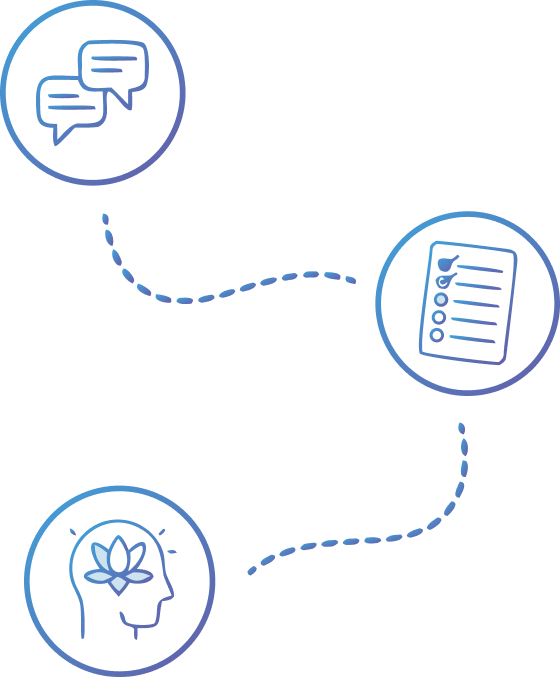
We use a simple, steady framework:
1) We get to know you
Your story matters. Understanding your lived experience helps us build the right plan.
2) We work toward your goals
We use EMDR (and an integrative lens when appropriate) to help you work through what happened and what it left behind.
3) We help you move forward — at a pace you can handle
We focus on safety, pacing, and capacity so the healing phase doesn’t
overwhelm your system.
Depending on the complexity of the history of trauma this can take 10-20 sessions, with more complex cases taking up to 2 years.

For departments and organizations
We also provide support at the department and leadership level for police, fire, EMS, and military settings.
This may include:
Our approach is trauma-informed, clinically grounded, and designed to meet the needs of both individuals and the systems they work within.
Begin your recovery
Whether you are carrying the callouts, shift work, and scenes that stay with you — or you are the partner or family member living beside that impact — you do not have to keep holding it alone.
We offer trauma-informed care that is practical, confidential, and built for the realities of first responder life.
We provide in-person therapy in Toronto and the GTA, with virtual sessions available across Ontario.

3,000+
Client’s Served

24
Years Experience

15,000+
Sessions Delivered

20+
Psychotherapists, Clinical Social Workers Specialized in Trauma Care




Frequently Asked Questions

How To Get Started
Starting therapy can feel like a lot. We make the first step simpler.
Step 1 — Book a Care Matching Call
Get your questions answered, tell us what you are looking for, and let us help place you with the right therapist or service.
Step 2 — Get Matched Thoughtfully
Based on your needs, goals, age, symptoms, and preferences, we help guide you toward the best-fit next step.
Step 3 — Begin Care at the Right Pace
Your first step or session includes a nervous system baseline so your care is built on data, not assumptions.
Let us guide you toward healing.
Healing does not have to feel vague, endless, or out of reach. With the right support, it can become clearer, steadier, and more possible than you think.